In short
- Brief: a supplier in business since 2010, selling to workshops and businesses, needed an identity and a website that build trust quickly and lead to a quote.
- What I did: the logo and color system, the site structure and copy, the design and the build.
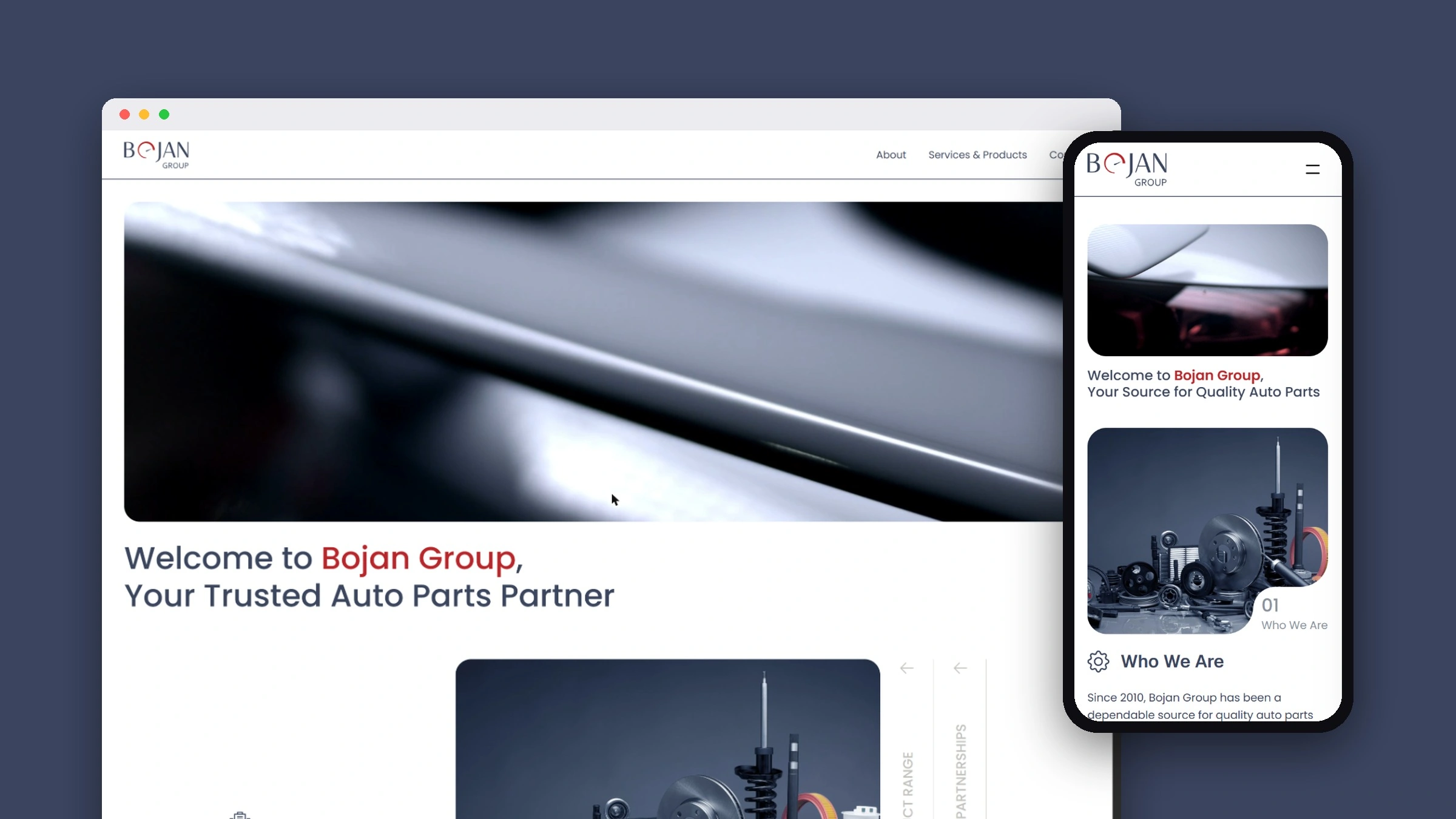
- Result: a five-page site, a redesign in early 2025 of the first site I made with the brand in 2023, organized around how buyers actually source parts, with one clear action: request a custom quote.
Who the site is for
The buyers are businesses: repair workshops, fleet operators and companies that need parts on time. They are not browsing for fun. They want to know three things quickly: can you get the part, will it fit, and will it arrive when you say. Every page is written to answer those questions in that order.
The identity
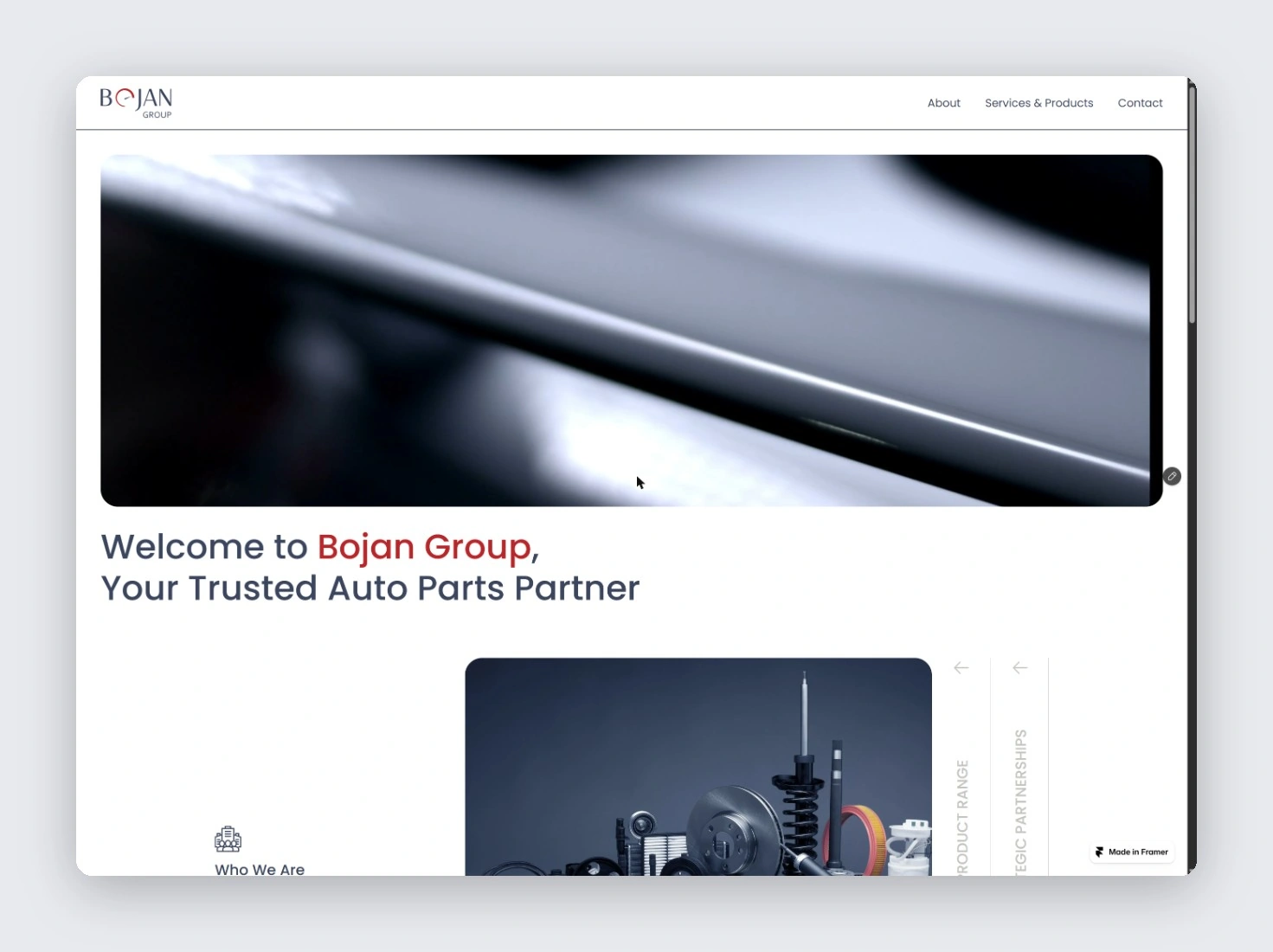
The wordmark is simple and technical, with one red arc inside the O that reads like a gauge. The palette is a dark slate blue for reliability, with red used sparingly for the brand name and the main actions, so the eye always lands on what matters.
Key decisions
1. Structure the offer around buyer intent
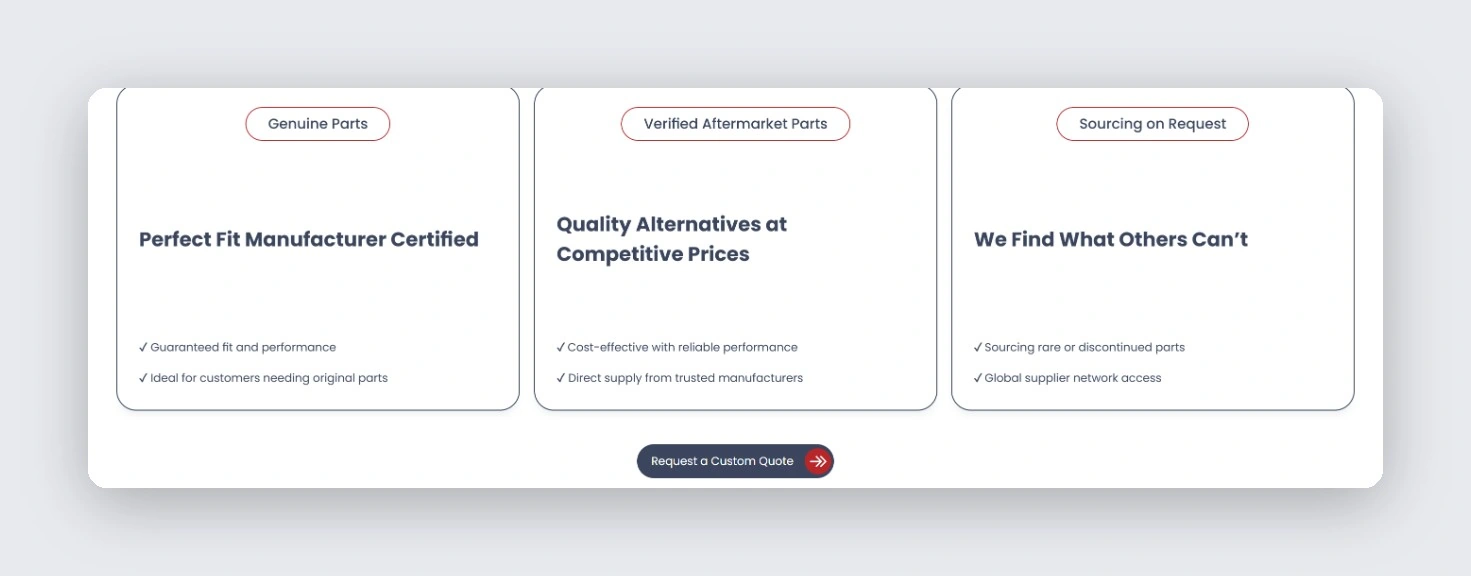
Instead of a long product catalogue, the site offers three ways to source parts, matched to what the buyer needs: Genuine parts for a guaranteed fit, Verified aftermarket parts for a lower price, and Sourcing on request for rare or discontinued parts. Each leads to the same next step.
2. One primary action
A parts supplier's site succeeds when someone asks for a quote. Request a custom quote is the main button, placed right after the three options, where the buyer has just made a choice.
3. Show reliability, don't just claim it
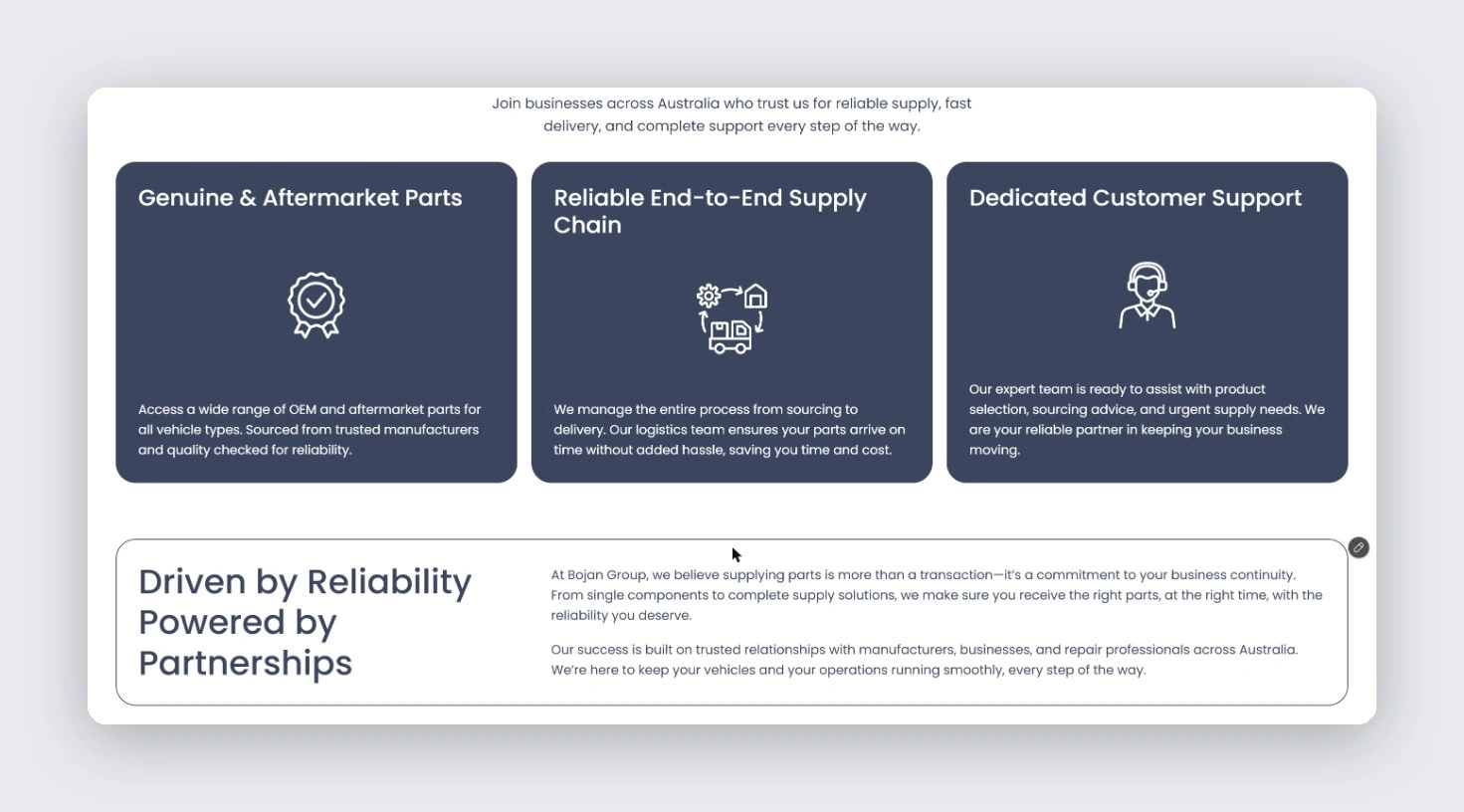
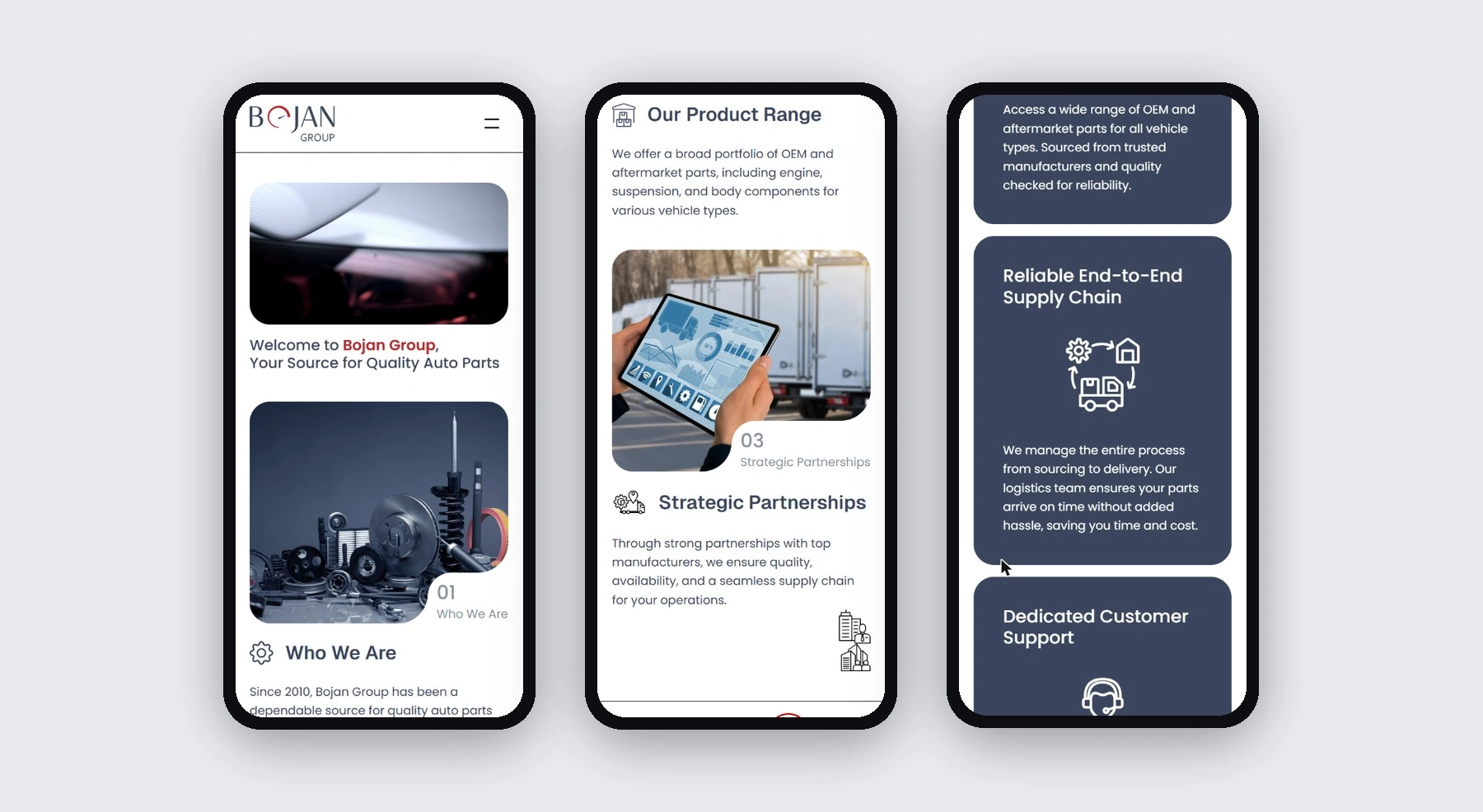
The services section explains what happens after an order (sourcing, logistics and support) in plain terms, and the home page opens its "Who we are" story with the company's track record since 2010.
4. Designed for the phone in the workshop
Many buyers check a supplier from a phone, at the workbench. On mobile, every section becomes a single column and keeps the same order, so the story reads the same as on desktop.
Handover
The site was built in Framer. I have since rebuilt it as a self-hosted version with a simple content panel, so the client can update text and images without me and is not tied to a site-builder plan; it moves to the client's own domain next.
What I would do next
- A structured quote form that asks for the part number or vehicle details, so the sales team gets requests they can answer in one reply.
- Searchable product categories for the most common parts.
- Measure what matters for this business: quote requests per month, and the share that turn into orders.