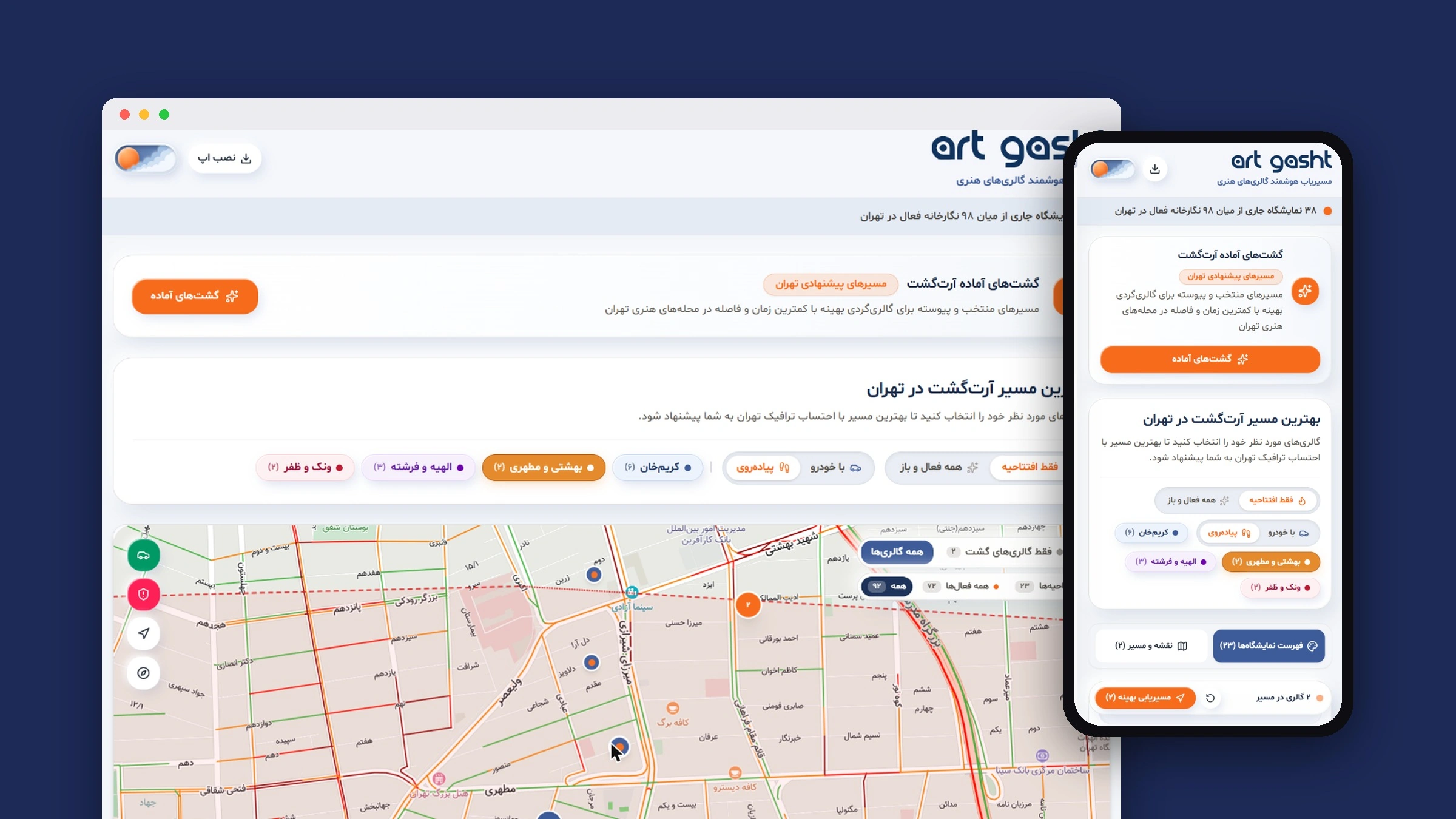
In short
- Problem: gallery-goers in Tehran find shows on scattered Instagram pages and an outdated listings site, then plan a multi-stop visit by hand, against opening hours and traffic.
- What I did: defined the product, designed the experience and built and launched it myself, including the data pipeline that keeps the listings current.
- Where it is: live at artgasht.com. At the time of writing it lists 98 galleries, 38 running shows and 23 openings that week.
The problem
Most gallery openings in Tehran happen at the weekend, and people who go usually want to see several shows in one outing. The information they need is spread out: each gallery posts on its own Instagram page, opening hours differ from place to place, and the listings website people used to rely on is no longer kept up.
So a simple question, what can I see this Friday, and in what order?, means a dozen open tabs, screenshots and guesses about traffic. People end up seeing fewer shows than they meant to, or arrive after a gallery has closed.
Who it is for
- Regular gallery-goers planning a weekend round of three to six shows.
- Art students and collectors who want to know what opened this week, by neighborhood.
- Occasional visitors who would rather follow a ready-made route than choose.
Constraints that shaped it
- Persian and right-to-left first. This is not a translated interface; layout, numbers and dates are designed for Persian from the start.
- Maps that work in Iran. The map and live traffic come from Neshan, a local provider, and every stop can be handed off to Neshan, Waze or Google Maps.
- Listings that stay current without manual entry. Shows change every week. Typing them in by hand would not survive a month, so collection is automated.
- One person. Every feature had to be worth building and maintaining alone.
Key decisions
1. Plan a visit, not just browse a list
The core object is the tour, not the gallery page. Every show card has one primary action, Add to tour, and a bar that stays on screen shows how many galleries are in the tour and opens the route. Browsing exists to feed the plan.
2. The route respects time, not only distance
A shortest path is useless if you arrive after a gallery closes. The planner uses each gallery's opening hours and a visit time you can set (15 minutes by default) to calculate the total time, distance and the best time window to go. It warns when a stop will be closed by the time you get there and suggests starting earlier.
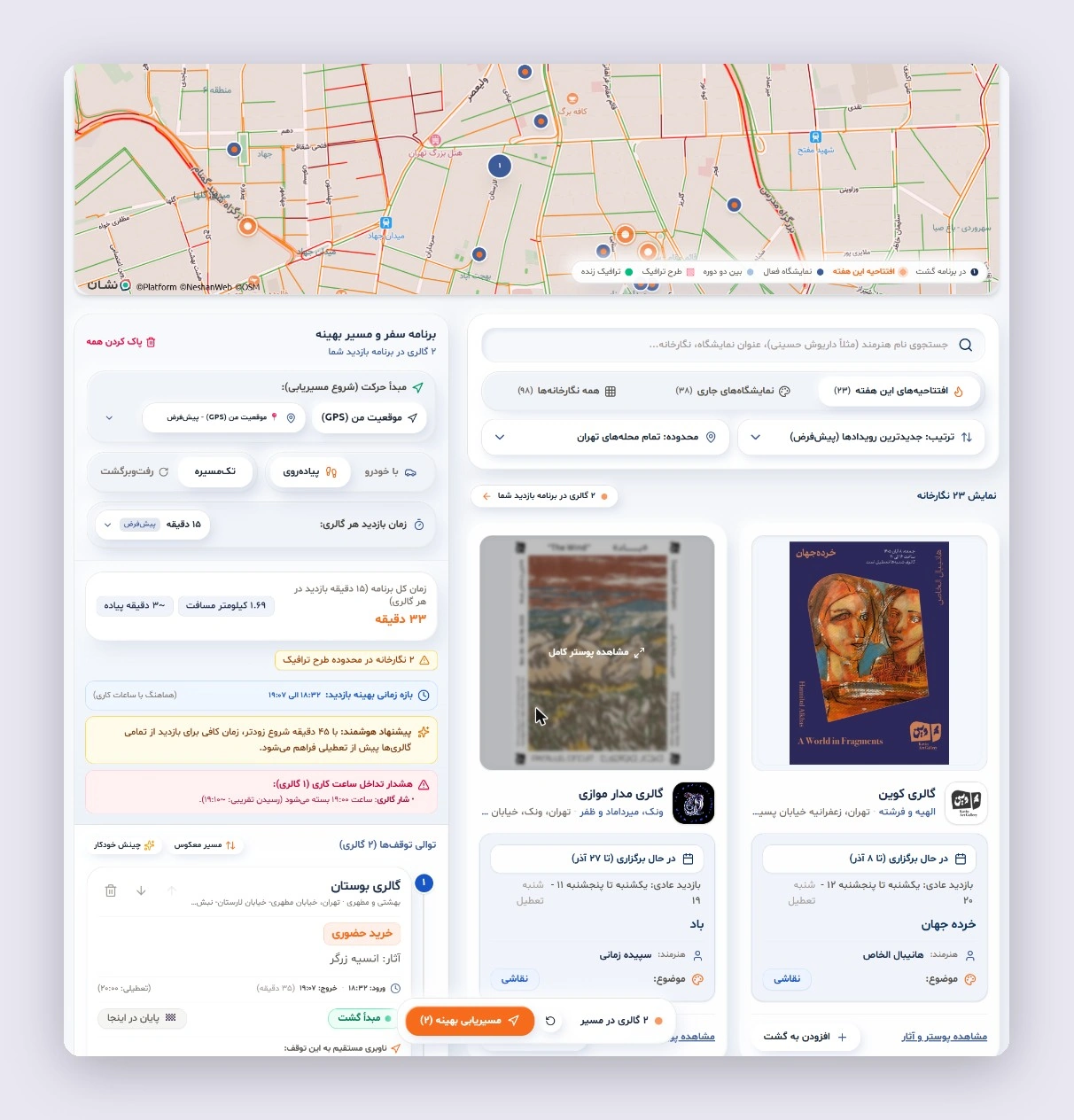
3. Show what matters to people who drive in Tehran
You choose driving or walking, one way or a round trip, and where you start. Galleries inside Tehran's restricted driving zone (tarh-e terafik) are flagged, and live traffic is drawn on the map, because these change the plan more than a few hundred meters of distance do.
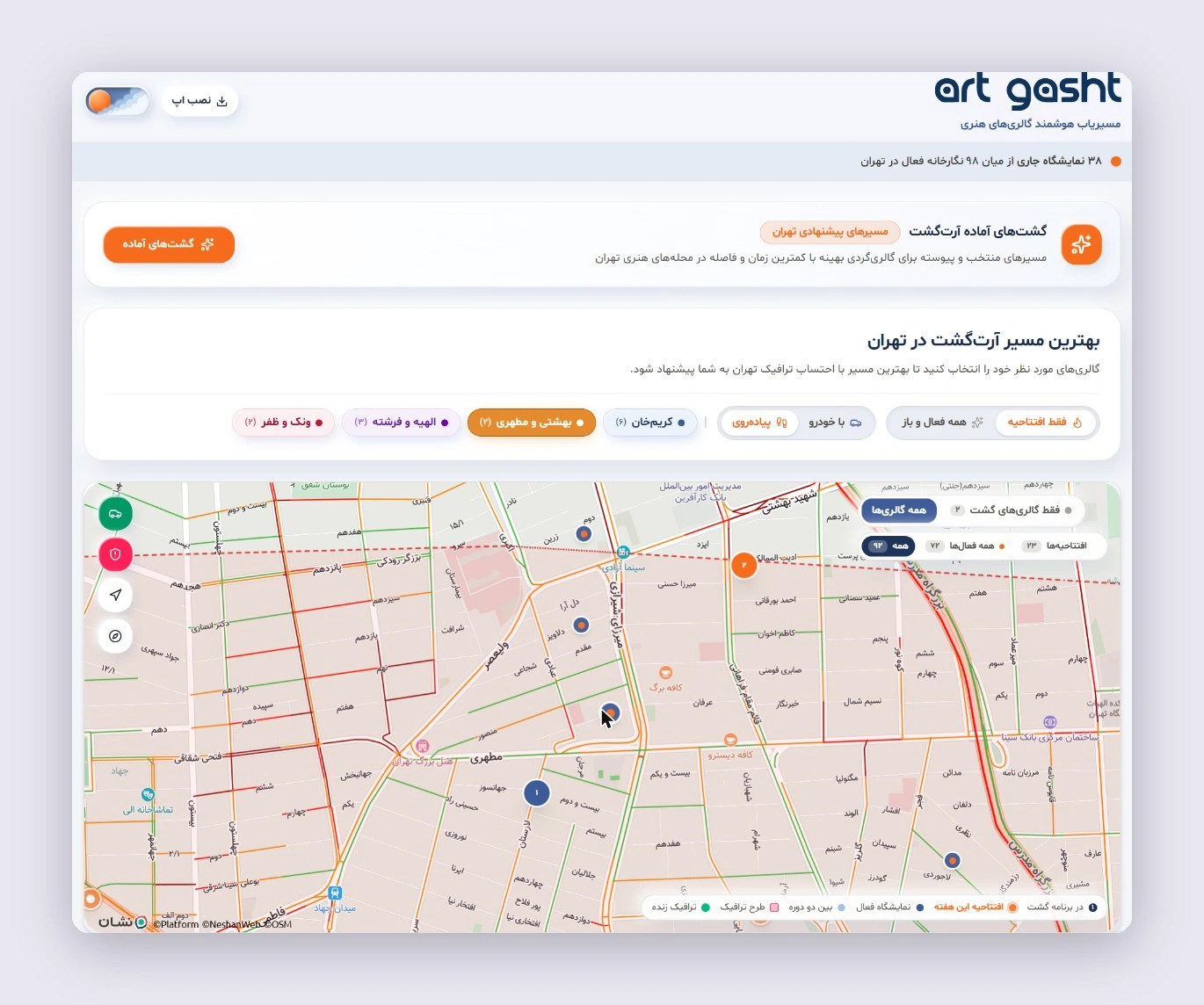
4. Hand off navigation instead of rebuilding it
Turn-by-turn navigation is a solved problem. Instead of building it, each stop and the whole route open directly in Neshan, Waze or Google Maps, and the plan can be copied as text to share with friends.
5. Defaults for the common case
The list opens on this week's openings, because that is what most people come for. Running shows and the full gallery list are one tap away, and neighborhood chips show how many galleries each area has. For people who do not want to choose at all, there are ready-made tours by neighborhood.
On the phone
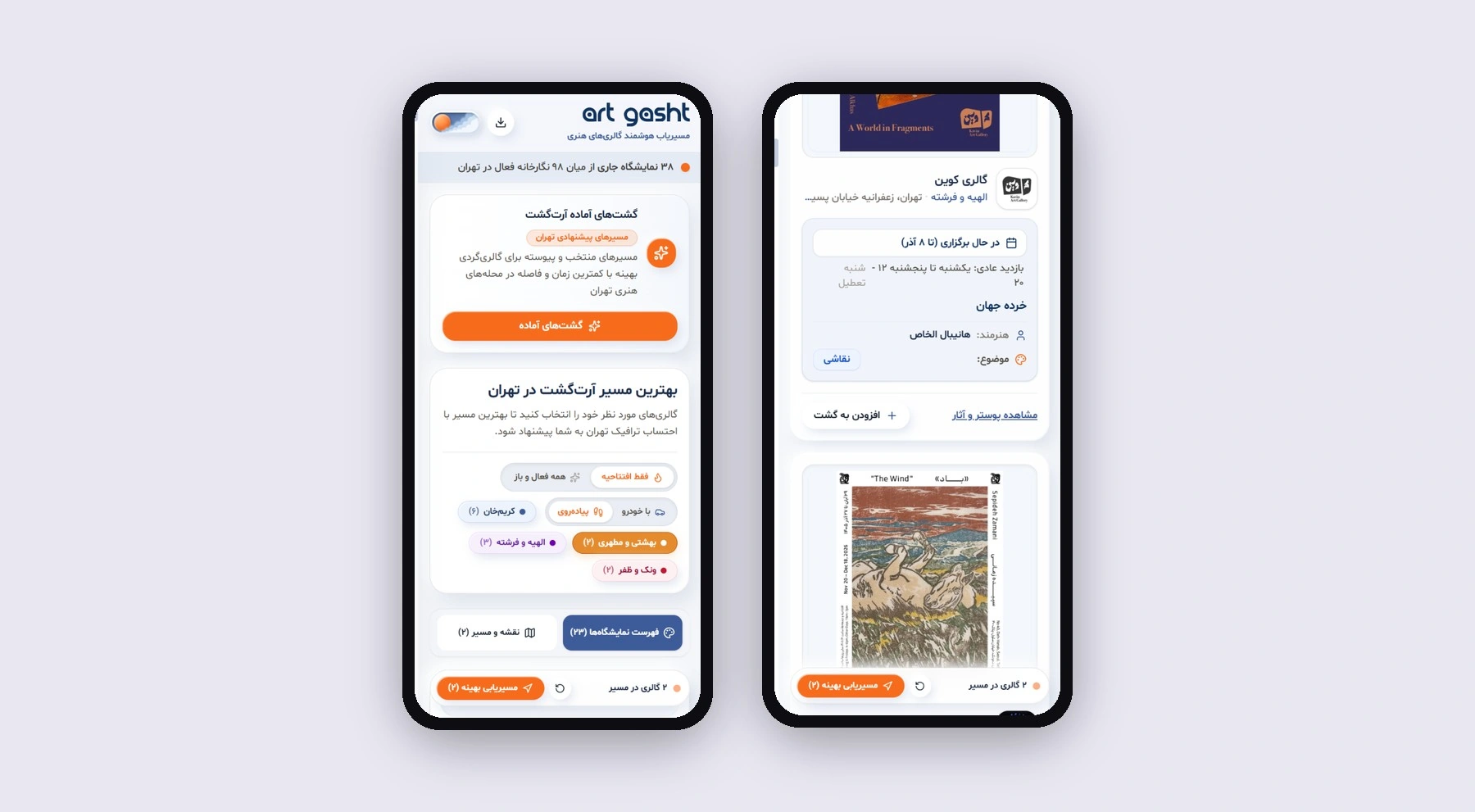
Most visits happen on a phone, often on the way. The phone layout splits the list and the map into two tabs, keeps the tour bar fixed at the bottom, and can be installed to the home screen like an app.
What I learned
The interface was the easier half. The harder half is data quality: galleries publish their hours in different places, and the sources do not always agree. A route planner is only as trustworthy as its least accurate opening time, so the next work is about trust in the data rather than new features: showing where each fact came from and when it was last checked, and making it easy for galleries and visitors to report a mistake.
What I will measure next
- Share of visits that create a tour, and tours that are handed off to a navigation app (the real sign of use).
- Weekend return visits.
- Listings reported or found wrong, as a data-quality rate.
- Next on the roadmap: an Iran-hosted mirror for faster access inside the country.